
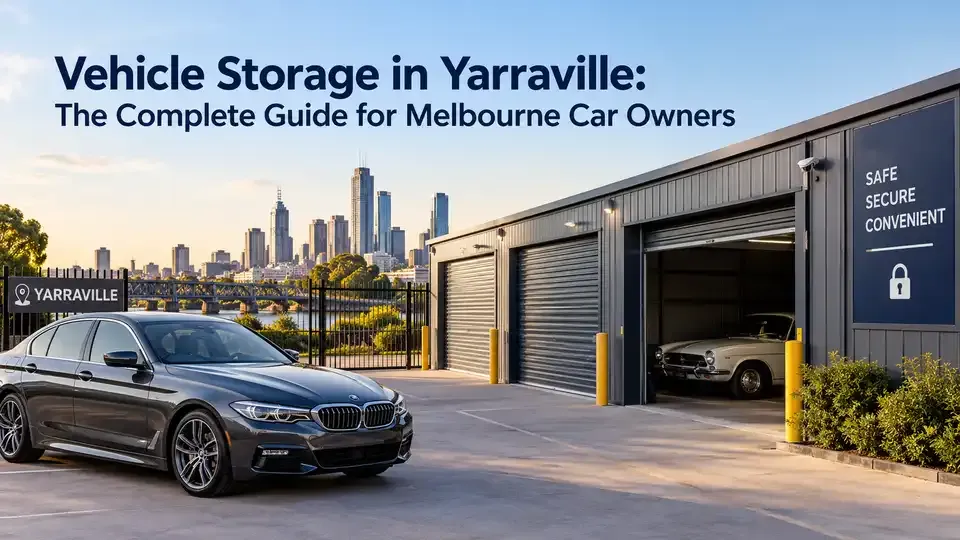
Quick answer: Vehicle storage in Yarraville gives you a secure, dedicated space for a car you can't or don't want to keep at home. It suits people who are moving temporarily, travelling overseas, owning a classic or second car, or short on garage and driveway space. Before you choose a facility, check security, access arrangements, payment terms, preparation requirements and the fine print, not just the price.
Finding reliable vehicle storage in Melbourne's inner west shouldn't add stress to an already busy time. Maybe you're heading overseas, downsizing, or protecting a car you love. Either way, this guide covers when storage makes sense, how to prepare your vehicle, what to ask providers, and the mistakes to avoid.
In this guide:
When Does Car Storage Make Sense?
There are plenty of good reasons to store a vehicle, and they often overlap. Here are the most common.
Moving Temporarily for Work or Life Changes
Relocating for a few months, taking a contract interstate, or working away from home all leave you with a car you can't use. Leaving it at a vacant property or on the street exposes it to weather, theft and parking fines, and asking a friend to look after it puts a burden on them. Storage takes that worry off your plate, and you'll know where your car is when you return.
Keeping a Second or Rarely Driven Car
Many Melbourne households own a vehicle that only comes out on weekends, for holidays or for special occasions. Others keep an older car that has sentimental value, or one that a family member will inherit or drive later. Paying to store it often costs less than the hassle of blocking your driveway or paying for a larger home.
Protecting a Classic or Collector Car
Classic and collector cars are often valuable and are usually driven only occasionally. They benefit from a tidy environment away from daily traffic, street parking and accidental dings. If you own a classic, ask potential providers about the type of space on offer, how the vehicle will be protected and what access arrangements suit you.
Heading Overseas
Going away for several months is exciting, but your car sitting on the street or in a shared driveway is a worry. Long absences leave a vehicle exposed to weather, dust, bird droppings and the occasional parking inspector. Not everyone has a family member who can start the car regularly and keep watch over it. Storage lets you travel without that nagging concern.
Freeing Up a Busy Garage or Driveway
If your garage is full of tools, boxes and bikes, or your driveway is jammed with vehicles, a car you rarely use can become a space-waster. Moving it into storage clears room for everyday cars, hobbies and household items. It is also a practical option for apartment and townhouse living, where parking is limited.
Other Common Situations
- Renovations or building work when access to your driveway or garage is restricted
- Downsizing or selling a home and needing to declutter before inspections
- Between vehicles, such as when you've bought a new car but haven't sold the old one
- Leasing or business needs, such as keeping a spare or seasonal vehicle off-site
Short-Term vs Long-Term Car Storage
How long you need storage affects both the preparation and the type of arrangement you will want.
| Short-term (days to a few weeks) | Long-term (several months or more) | |
|---|---|---|
| Typical reasons | Renovations, house sale, brief absence | Overseas travel, relocation, classic or second car |
| Preparation | Basic clean, fuel check, personal items removed | Full clean, battery care, tyre care, fluids and document checks |
| What to ask providers | Minimum terms, access hours | Payment options, condition checks, access arrangements, cover requirements |
| Best for | Flexibility | Peace of mind and cost planning |
Not sure which applies to you? Tell the storage team your expected timeframe. It doesn't need to be exact, and a good provider will help you plan around it.
How to Prepare Your Car for Storage
A little preparation goes a long way, especially for longer stays. Use this checklist before you drop your car off.
1. Clean the Inside and Out
Remove rubbish, food, drink containers and personal belongings. Food scraps can attract pests, and moisture trapped in a dirty interior can cause odours or mould. Wash and dry the exterior so dirt, bird droppings and grime do not sit on the paint.
2. Check Your Tyres
Make sure your tyres are inflated and in suitable condition. Over months, tyres can lose pressure. Ask the facility or your mechanic whether they recommend a particular approach for extended storage.
3. Look After the Battery
Batteries can go flat when a car is not started for a long time. For long-term storage, ask the facility whether you can disconnect the battery or use a battery maintainer, and check the rules before making changes yourself.
4. Think About Fuel and Fluids
Many owners fill the tank before longer storage, and some use a fuel stabiliser. Check your owner's manual or ask a mechanic what suits your vehicle, especially if it's a classic. Also ask the facility whether they have any requirements about fluids or leaks.
5. Consider Handbrake and Cover
For long stays, some owners avoid leaving the handbrake engaged and use wheel chocks instead. A breathable car cover can protect against dust. Confirm with the provider what is allowed on site.
6. Sort Out Registration and Insurance
Contact your insurer to tell them the vehicle will be stored and ask whether your policy or premium changes. Also check with Transport Victoria what applies to your registration while the car is not in use. Rules can change, so confirm current requirements rather than assuming.
7. Gather Your Documents
Have your ID, vehicle registration details and any paperwork the facility requests ready when you arrive. Take dated photos of the car's condition before it goes into storage, so you have a record.
8. Plan Your Return
Decide how you'll get the vehicle out when you come back. You may want to check the battery, tyres and fluids before driving, and it helps to know whether you'll need to book a collection time.
Storage Options Compared
Facilities vary in what they provide, and not every provider offers every type. Here's a general guide to the options you may come across, so you know what to ask about.
| Option | What it generally means | Often suits |
|---|---|---|
| Indoor / enclosed space | A vehicle stored inside a building or enclosed unit | Classic, collector or high-value vehicles |
| Covered space | A roofed area with some protection from sun and rain | Everyday and second cars |
| Outdoor space | An open, designated parking area | Short-term storage, larger vehicles or tighter budgets |
Which is right for you? It depends on your vehicle, budget and how long you need it stored.
How to Choose the Best Vehicle Storage in Yarraville
Price matters, but it shouldn't be your only filter. Cheaper isn't better if the security, access or terms don't suit you. Here's what to check.
Security
Your vehicle is a valuable asset, so ask directly what protects it:
- Is the site monitored by CCTV?
- Is entry controlled, and who can access the site?
- Is the site well lit and fenced?
Yarraville Storage facility is fenced and monitored by CCTV, with coded access so only you can reach your space.
Access
Every storage business has its own arrangements. Ask:
- Can I visit or collect my car whenever I like, or only during set hours?
- Do I need to book in advance?
- Can someone else collect the car on my behalf?
Knowing this from the start avoids frustration later.
Payment Arrangements and Terms
- How is billing structured, and how often do I pay?
- Is there a minimum term or a notice period?
- Are there any additional fees?
Preparation Requirements
Ask what the facility expects before you bring the car in, such as fluid levels, battery condition, cleanliness or paperwork.
Location and Convenience
Yarraville is well connected to Melbourne's inner west, the CBD and major roads, so it's easy to drop off and collect a vehicle. Think about how often you'll visit and how you will get home after dropping the car off.
Terms and Conditions
Reading the fine print isn't exciting, but it tells you exactly what you're agreeing to, including liability, insurance expectations and what happens if something goes wrong.
Tip: The fastest way to get clear answers is to speak to the team directly. A good provider will explain their process without pressure.
Common Mistakes to Avoid
- Choosing on price alone. Compare security, access and terms too.
- Skipping insurance checks. Don't assume your policy still applies unchanged.
- Leaving food or rubbish inside. This can attract pests and cause odours.
- Forgetting the battery. A flat battery is one of the most common problems after long storage.
- Not reading the terms. Surprises are unwelcome, especially about fees and notice periods.
- Not taking photos. Dated photos help if there's ever a question about condition.
- Leaving it too late. Book early if you have a fixed travel or relocation date.
Frequently Asked Questions About Car Storage in Yarraville
How long can I store my car?
That's up to you. Some people store a vehicle for a few days or weeks, others for several months or longer. Talk to the Yarraville Storage team about your expected timeframe so they can suggest a suitable arrangement.
Can I store a car I don't use regularly?
Yes. Storing a rarely used vehicle is one of the most common reasons people choose car storage. It frees up space at home and gives the car a secure place until you need it.
Do I need to clean my car before storing it?
It's a good idea. Remove all rubbish and personal belongings, give the vehicle a basic clean, and check the tyres and general condition before you bring it in.
Can I access my vehicle while it is in storage?
Yes. We aim to make storage convenient for customers. Speak with our team about collection and access procedures so you know how it works before you start.
Can I use car storage for the long term?
Yes. Long-term options are available. They're often used for second vehicles, classic cars, rarely driven cars, or when you will be away for an extended period.
What should I check before choosing a vehicle storage facility?
Look at security (such as CCTV and controlled access), how and when you can access your vehicle, payment arrangements, preparation requirements and the terms and conditions. Don't choose on price alone.
Do I need to tell my insurer if I store my car?
It's a good idea. Contact your insurer before storing your vehicle to confirm whether your policy or premium is affected. Also check your registration requirements with Transport Victoria.
How do I prepare my car for long-term storage?
Clean it inside and out, check your tyres, ask about battery care, consider fuel and fluid needs, and gather your documents. Take photos of the car's condition before you leave it.